


April 7, 2026
Why Babies Love Faces, Patterns, and Movement
Understanding the natural instincts behind newborn attention
If you’ve ever held a newborn and noticed them staring intensely at your face—or at a bold pattern on a blanket—you’ve witnessed something remarkable. Even in the earliest weeks of life, babies are wired to notice specific things in their environment.
- Faces
- Movement
- High-contrast shapes
These early visual preferences are not random. They are part of a fascinating biological design that helps babies connect with caregivers and begin learning about the world. Understanding these instincts can help parents engage their babies in simple, meaningful ways during the newborn stage.
Why Babies Are Drawn to Faces
From the moment they are born, babies show a strong preference for looking at human faces. Scientists believe this instinct is built into the brain to help babies quickly identify and bond with caregivers. Faces provide babies with:
- Emotional connection
- Social cues
- Communication signals
When babies look at faces, they are not just staring—they are studying.
- They watch mouth movements while caregivers talk
- They notice eyebrow raises and smiles
- They observe how expressions change
All of this helps babies begin learning the foundations of communication and emotional connection.
Why Contrast Captures Attention
Another powerful visual attraction for newborns is contrast. Because their vision is still developing, babies see bold differences between light and dark much more clearly than subtle colors. This is why black-and-white images or strong patterns are so engaging.
When babies focus on these shapes, they are:
- Strengthening visual pathways in the brain
- Learning to focus their eyes
- Practicing sustained attention
High-contrast visuals act almost like a visual exercise for developing eyes.
The Fascination With Movement
Movement is another powerful attention trigger for babies. Slow, predictable motion—like a caregiver gently swaying or a patterned object moving across their field of vision—helps babies practice visual tracking.
Tracking is an important skill that later supports:
- Hand-eye coordination
- Reaching and grasping
- Reading and visual processing
This is why babies often appear captivated by ceiling fans, shadows, or slowly moving objects. Their brains are practicing how to follow movement.
Turning Everyday Moments Into Developmental Opportunities
Parents don’t need complicated activities to support these natural instincts. In fact, many of the most beneficial interactions happen naturally throughout the day.
- Talking Face-to-Face: During feeding, diaper changes, or snuggles, simply talking and making eye contact with your baby encourages social and visual development
- Letting Babies Observe Patterns: Bold shapes and patterns give babies something interesting to focus on during awake time
- Gentle Movement: Rocking, swaying, or slowly moving objects across a baby’s field of vision encourages visual tracking
These simple moments help babies practice focusing, observing, and learning.
What Your Baby Is Looking At Most
If babies spend most of their time studying the faces of their caregivers, it raises an interesting question: What else are they seeing while they’re looking at you?
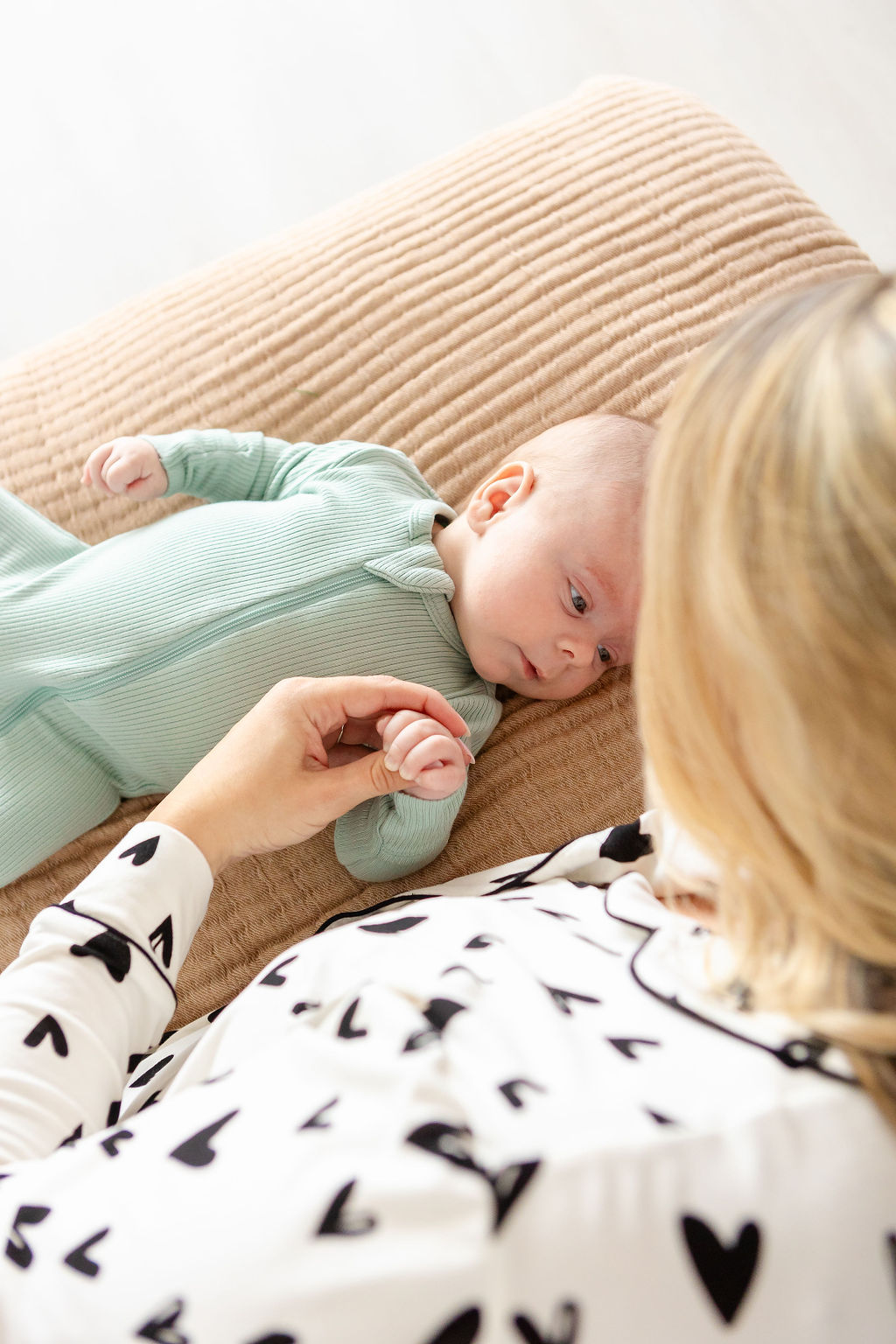
During feeding, snuggles, contact naps, and everyday moments, babies are typically positioned about 8–12 inches from their caregiver’s face and chest—their ideal viewing distance.
That means newborns are not just looking at faces. They’re also looking at the clothing their caregiver is wearing.
For babies whose vision is still developing, bold patterns and strong contrast are much easier to focus on than soft colors or subtle designs. When those patterns are within their natural viewing range, they can provide gentle visual stimulation during everyday interactions.
This idea led one mom to an unexpected realization: what moms wear around their babies can actually become part of their visual world.
That insight inspired seesee pajamas, a line of pajamas designed specifically for moms of newborns. Instead of traditional sleepwear, seesee features bold, high-contrast patterns that babies can naturally focus on while being held, fed, or snuggled.
Because babies spend so much time studying their caregivers, those patterns can create little moments of visual curiosity during everyday routines—whether it’s a morning cuddle, a quiet contact nap, or feeding time.
Parents often tell seesee their babies will quietly study the patterns while they’re being held, sometimes giving them a few extra peaceful minutes in the process.
You can explore the collection at shopseesee.com
Small Moments, Big Impact
Early development doesn’t require elaborate activities or constant stimulation. Babies are naturally curious about the world around them.
- A caregiver’s face
- A bold pattern
- A moving shadow
These everyday experiences are more than entertainment—they are the building blocks of learning. By understanding what naturally draws a baby’s attention, parents can lean into those instincts and create meaningful moments of connection and discovery.
Explore pajamas designed for curious newborn eyes at shopseesee.com. Use code DOULA for 20% off your order.