


February 22, 2026
Let's Talk Baby Formula: Podcast Episode #330
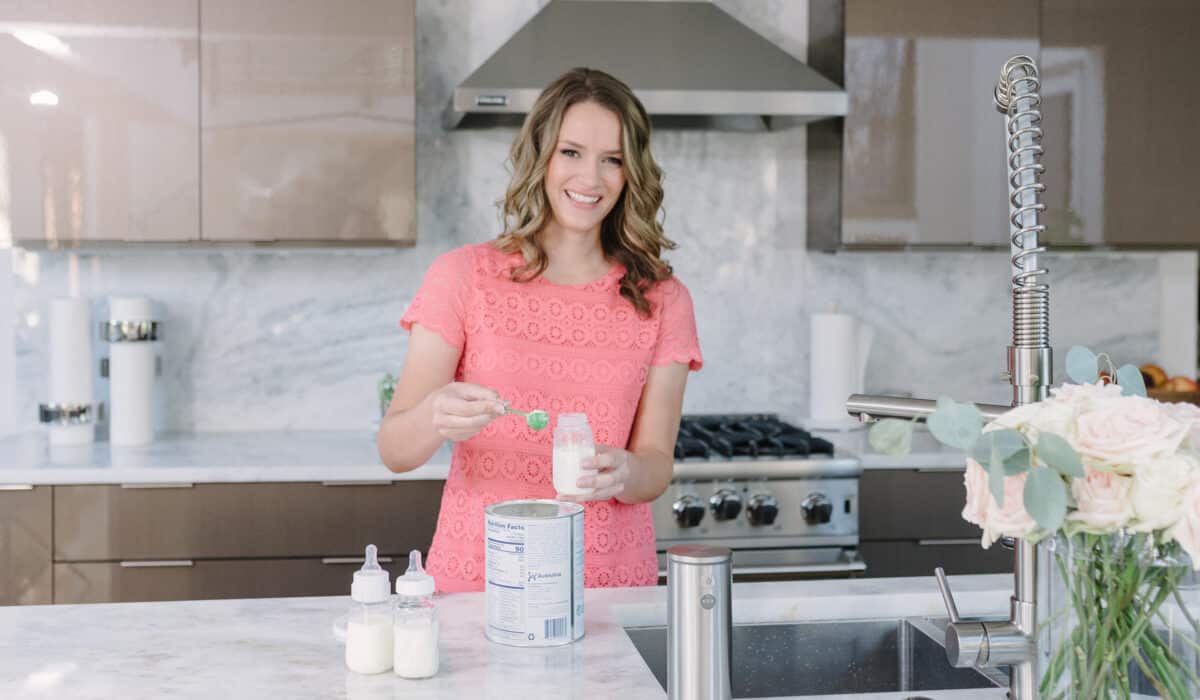
Choosing a baby formula can feel overwhelming, especially in a world full of strong opinions and fear-based messaging. In this episode, I’m joined by Mallory Whitmore, known as The Formula Mom, to have an honest, judgment-free conversation about formula feeding.
We break down the different types and formats of baby formula, how to read ingredient lists without getting caught up in fear around soy, corn syrup, or seed oils, and how to release the guilt or shame that can sometimes surround feeding choices.
Whether you’re exclusively formula feeding, combo feeding, or simply exploring your options, this episode will help you feel informed, confident, and supported.
Mallory is the author of the new book, Bottle Service: Education and Encouragement for Guilt-Free and Successful Formula Feeding, which is available in bookstores and online.
This episode is sponsored by Cozy Earth. Use the code GOLDCOAST to receive a discount of up to 20 percent off.
Hello, hello! This is Kristin Revere with Ask the Doulas Podcast, and I am thrilled to chat with Mallory Whitmore today. Mallory is the founder of The Formula Mom and education lead at Bobby, and our topic today is all about choosing the perfect formula for your baby.
Mallory is a mom of two, educator, advocate, and the author of Bottle Service: Education and Encouragement for Guilt Free and Successful Formula Feeding. She’s the face behind The Formula Mom, an online platform that helps parents make informed, confident, and supported infant feeding decisions.
She lives in Nashville, Tennessee with her family.
Welcome, Mallory!
Thank you so much for having me! I’m so excited to chat today!
I’m thrilled to reconnect with you! I met you at your session at Mom 2.0 a year ago, and you gave me so much helpful information about transitioning a business. We connected about your upcoming book, which comes to life very soon!
Yes, so soon! February 24th. It’s wild.
Very soon! So let’s talk about your tips and what you know, being an expert in the formula space. I have clients with so many questions about formula, whether it’s supplementing or dealing with allergies and so on.
Oh, my gosh, yeah. There are a million places we could start, but obviously, the first one that people always want to know is, tell me what formula to pick. You go to the grocery store and there are 30 different options and they all have wild claims about brain development and immunity and whatever else. It’s really overwhelming for parents, especially if they’re new parents. They’re hormonal. They’re recovering from birth. They’re sleep deprived. It’s a lot. It’s overwhelming. And so the first thing I like to encourage parents with is that every infant formula in the US market that’s regulated, that’s available on shelves, will provide the complete nutrition your baby needs to grow and thrive. So from that standpoint, you can’t pick “bad” formula or a “wrong” formula. All of them offer equivalent nutrition that’s based on breastmilk, what we know about breastmilk nutrients, to provide complete nutrition.
So the first thing I like to do is encourage parents that you’re not going to make a wrong choice. The question really is, if you’ve got all these products that offer similar, equivalent, complete nutrition – which one is the best for your baby’s needs and for your personal preferences and goals as a parent? Because that matters too, right? Sometimes parents will be like, well, I just feel bad about using formula. And part of it is that the formula they’re using doesn’t align with their own values or their own needs or their own preferences, and that includes things like budget and certifications and availability. I like to direct parents to start there first. Before you’re standing in front of the wall of options, really think about what’s important to you as a parent. Is it price per ounce? Is it availability? Do you want it to come to your house every month, or do you want to be able to get it at your local store? Does it need to be kosher or halal? Does it need to be vegan? Any number of things that are important to you, you should factor that into your formula decision making process.
Exactly. And I started out with my first, a NICU baby – she started on formula, transitioned to breastmilk with a lot of help from lactation consultants inside and outside of the hospital. But I am a big fan, having needed the formula for weight gain and glucose issues. So some of the misconceptions about formula, and the benefits, as you said, of the nutrition – I mean, my daughter wouldn’t have left the NICU if I was pumping exclusively. I wasn’t able to give her what she needed.
Yeah, and I think especially for NICU parents, it’s so tricky because obviously, we know that breastmilk is dynamic, offers protective factors like antibodies and other bioactive components. But parents often don’t realize that in some cases, if you have a significantly premature baby or a low birth weight baby, that breastmilk is not nutritionally sufficient. So it offers all these great properties, but it might not have the amount of fat or the amount of calories that a baby who is born prematurely needs because they weren’t intended to be drinking human milk at that gestational age. Yeah, it’s tricky for all parents, but I think for NICU parents especially, it can be a really hard situation because it can be part of a broader grieving of the experience that they thought they were going to have postpartum and having it look completely different than what they had envisioned or hoped.
Exactly. And I know that in the past, we used to be given formula samples at the hospital or at the pediatrician’s office, and a lot of that has changed, especially with Baby Friendly hospitals.
Yes.
And I’m sure economically – I mean, working as the education lead at Bobbie, I mean, the cost of samples and give-aways is also a challenge, I’m sure, as part of that factor.
Yeah, it is. I think we’re really seeing sort of a cultural shift where there are a lot of parents that say, hey, I didn’t ask for this. I don’t want this. I don’t need this showing up at my house that I didn’t sign up for. In some cases, people feel like it’s kind of taunting them or it’s tempting them. My opinion is always that it’s better to have something and not need it than need it and not have it. So if you end up with a sample, or if you want to get a can or two before birth, that’s great. Put it in an upper cabinet. If you don’t end up using it, that’s fine. You can donate it. So I don’t think the problem is necessarily having something on hand in case. I think the problem is sometimes historically the way formula has been marketed has been a bit predatory. And one of those ways is buying information from registry providers like Target or Amazon or whatever and then shipping them formula they didn’t ask for. So at Bobbie, we really try to take a different approach. Not only because, of course, it’s incredibly expensive to do all of that mailing, and we’re a smaller company, but our goal is to reach the parents that are looking for us and not necessarily to go out and source parents that are trying to breastfeed to convince them that they should use the product.
And I do think you’re right. With Baby Friendly hospitals as well, in some cases we’re seeing kind of the pendulum swing too far in the other direction where parents want to use formula and the hospital won’t provide it, or the hospital makes them sign a waiver saying that they understand breast is best, but they’re choosing to use formula against medical advice, and that’s a really difficult thing to manage, again, when you’re on painkillers and you’re tired and you’re recovering from birth and you just want to feed your baby and you’re made to feel kind of like a criminal for it. I do think that sometimes we see the extremes go too far on both ends, like we can say maybe we shouldn’t be sending formula samples to people who haven’t asked for it, and also, maybe we shouldn’t gatekeep formula from the people who do. And sometimes it’s hard to navigate those sort of extreme positions, but that’s what we tend to see, which makes it difficult.
Right. Yeah, that makes so much sense. And being in an area in Michigan where there are a lot of Baby Friendly hospitals, which I’m a fan of – I have clients who choose to use formula from the start and will often either put it in their birth plan or even I’ve had clients put a sign above their bed saying, don’t ask me to breastfeed. And there are certainly different measures that hospitals have taken to support all types of feeding options, but I found that things have changed in my years as a doula.
Oh, same. Yeah, even between my first child – my daughter is nine and a half, and then my son was born three years later. And even those three years, things were totally different. At the same hospital! And so I always encourage parents, if you think you might want to use formula, or if you just want to be prepared with formula after birth, to check with your hospital or your birth center, wherever you’re delivering, ahead of time so you understand their policies. My hospital, if I wanted to use my own formula, I had to have written documentation from my child’s pediatrician that that was okay. And that would have been really hard to source while I was in recovery. Check with them. See what their policies are so that you’re prepared. And a lot of parents don’t know, too, that some hospitals won’t let you bring in your own formula at all because it’s a liability for them. So if you bring in formula and they don’t know how it’s been stored or if it’s been tampered with, and then your baby gets sick, it’s a liability for them. So some hospitals won’t allow it at all. So it’s always a good idea to check beforehand so you’re not caught off guard in the moment when you’re doing the hard work of having a new baby and recovering.
Yeah, those are great questions to ask for our listeners who may be taking a childbirth class at a hospital or to ask their OB. And certainly as you mentioned, if a note from the pediatrician is needed, if you don’t have other children, we often don’t meet our pediatrician until the first visit.
That’s so true, yes. So call ahead of time or ask your questions in the class so that you have an idea so that you can be prepared. Add that to your pre-hospital checklist.
And as far as ingredients – I mean, we are so health conscious now, which I love.
Yes, absolutely. We are in a sort of interesting cultural moment where there’s becoming a lot more attention on formula, which is, I think, both good and bad. In some ways, there’s pressure to increase or update, rather, our USFDA ingredient standards, which haven’t been updated since 1981. And then at the same time, we are seeing an increase in parents who are concerned about things that they really don’t need to be concerned about. And certainly as new parents, we have enough things to be stressed over. One of my goals is always to help parents know, what are the things that you actually need to pay attention to, and what aren’t? A couple of those off the top: provided your baby doesn’t have any sort of rare congenital lactose intolerance – and this would be discovered on your newborn heel prick, so we’re talking incredibly rare, congenital, genetic – most formulas use lactose as the carbohydrate source. This is because the primary carbohydrate in breastmilk is lactose. And this is true whether or not the mom consumes dairy. So sometimes parents will think, I removed dairy from my diet because my baby struggles with lactose. In breastmilk, lactose is inherently produced. So your baby is getting lactose in breastmilk no matter what you’re doing or eating.
And because of that, we know that babies are biologically designed to digest lactose after birth. Unlike adults, where some of us who are lactose intolerant no longer produce the lactase enzymes necessary to digest it – lactase enzymes populate in the infant’s gut during the second and third trimester of pregnancy. So they’re biologically designed to digest lactose. So I always recommend, number one thing if you’re looking for formula, is to look for one that has lactase as the carb source because we know that’s what makes it more similar to breastmilk. And we also know the great majority of babies will be able to tolerate. So look for lactose as one of the first roughly three ingredients in the ingredients list.
The other thing I recommend is added whey protein. So cow’s milk, if it’s unadulterated, just the cow’s milk that you can get from the store, tends to have 18 to 20% whey protein. And whey stays liquid during digestion. If you think about that old nursery rhyme, curds and whey – whey stays liquid; curds form tough little balls, almost. So cow’s milk doesn’t have a lot of whey inherently. It has about 20%. Breastmilk, on the other hand, ranges from 60 to 80% whey, depending on where in your postpartum journey you are. Babies really do well with additional whey. Getting a formula that has whey in the ingredient list, typically in the first five ingredients, can help make for a more easily digestible product that’s, again, more similar to breastmilk. So those are the two ingredients that I always recommend you look for. The ingredients that parents tend to worry about are soy because of some research that we have are phytoestrogens in soy protein as well as some concerns about how soy is processed in terms of pesticides and GMOs and things like that.
I will say the AAP stance is that soy formulas should be used only after a hypoallergenic or elemental, which is an amino acid formula, has been trialed and failed, or in the case where you have a religious or cultural or personal preference for a plant-based option. So generally speaking, most babies do not need a soy-based formula.
The other ingredients parents tend to have concerns about are seed oils. We’ve seen a huge increase in discussion about this, even in the last three years or so, where parents are like, I don’t consume seed oils. I don’t want my baby to have seed oils. Why is there sunflower oil in the formula? And the reason that parents tend to be concerned is because there’s a narrative going around, especially in social media, that seed oils are inflammatory because they contain omega 6 fatty acids. And it’s true that if you have a wildly out of ratio consumption of omega 6s, this is not good. We want a balanced ratio of omega 6 and omega 3. But I want to encourage parents that these omegas, including omega 6, are essential fatty acids. These are essential for appropriate growth and development. And we also know that on average, the fat content in breastmilk is roughly 15% omega 6 linoleic acid. So if we believe that breastmilk is the gold standard or is the ideal for infant nutrition, then we also have to believe that babies need linoleic acid. And the best way to provide linoleic acid, omega 6, in infant formula is through seed oil.
Sometimes I see parents and they’re so concerned about the small or hypothetical risks of the seed oil, and I’m like, no, you need to be more concerned about the very real risk of malnutrition and stunted brain growth because that’s what you get if you don’t include those important oils in the formula. For parents that are particularly concerned, you can mitigate some of the concerns that parents tend to have about seed oil by choosing organic. So if you choose an organic formula, the oils are going to be expeller pressed, so extracted using pressure versus chemical extraction via solvent like hexane. The seeds that they’re using for the oils are going to be non-GMO. They also use a different process to withdraw excess color using clay or charcoal versus bleaching agents. So for folks that are particularly concerned – and I will say, I personally am not concerned. I am not concerned about the seed oils in formula. I know they do much more benefit than any potential harm. But if you are concerned, if you want to alleviate some of the questions that people have about seed oils, choosing organic is a good way to do that.
That makes sense. And of course, you need to pay more for organic, but we do for our own food, and I find that it’s worth it. So many amazing details that I’m sure we can find in your book, Bottle Service?
Yes, absolutely. I’m so thrilled to essentially have the book that I went looking for in 2016 when my daughter was born, and we had tried to breastfeed. She was also preterm, although late preterm. But she just was not ready to be on the outside, and she had a really weak suck, and she was super sleepy and floppy and just was not a good eater. I thought, though, that if I did all the right things – I had gone to the breastfeeding classes. I had read the books. I had talked to the lactation consultant. I was on the Reddit boards. I was doing all the things. I thought if I did all the things, then of course she would breastfeed. And that’s just not how our journey turned out for a variety of reasons related to her and me and my mental health and her physical health and everything else. I went looking, thinking, okay, if I’m not going to be the best breastfeeding mom I can, I can at least be the best formula feeding mom, and I’m going to learn all the things, and I’m going to do this right. I’m going to make the best choices. I’m going to X, Y, Z. And there was just nothing. And I was like, that’s very strange. Because I knew I wasn’t the only one. Certainly, I couldn’t be the only one, right? With questions about how to formula feed and how to pick a formula and how to do this safely and successfully and also how to navigate my feelings about it, my guilt that I felt a little bit of relief when we switched. I thought I should feel bad, but instead I felt relief, and what does that mean? So that’s really what I crafted in this book. And it includes all of that. So it’s got sections that are strictly educational with those key foundational topics. How do you make a bottle? Why are certain ingredients in there? How do you navigate digestive issues? How do you know if you need to move up or down a nipple size? Things like that. But then there are also Mom Notes in the book, which are just little vignettes about new motherhood and coming to terms with your journey and defining what success looks like and tips for feeling more like yourself again and things like that. It’s the book that I wanted and the book that I’m really proud to be able to offer to other new parents almost ten years later.
I love that you took your personal experience, and moms always get things done. You made it your passion! Yeah, I didn’t have the resources. I could have certainly used a book like Bottle Service or your platform as The Formula Mom, back when I was dealing with a lot of advice, whether it was helpful or not, about my feeding choices and my struggles from well-meaning friends and family and couldn’t find information about the choices I needed to make. And just like you, I did all of the things. I’m a type A personality. And it’s hard to find a village. So with your platform being there to give information and certainly you took it beyond The Formula Mom and used your advocacy to become education lead at Bobbie. And then all of that research went into your book. I just love it so much.
Thank you. I do, too. It’s been such a labor of love, and I think it’s especially needed in this sort of current cultural moment where parents are more confused than ever where to look to find evidence-based, research-based information about parenting and their child’s health. And I am not a doctor. I say that throughout the book. But what I am is a researcher, previously professionally and now just for fun. I guess maybe still professionally in this context. But my goal with this book was to create a resource that not only made parents feel informed and affirmed but also really confident that the information provided was trustworthy, was backed by years and years of expert research, because currently – it used to be that we could look at the FDA and be like, yeah, that makes sense. Or that we could look to the CDC and be like, yeah, that’s great. And there are lots of parents that no longer feel like that because the agencies have changed in the last year or so. I’m grateful also, even though it’s difficult every day on the internet trying to be a bastion of reason and date, but I’m grateful to be that resource because it is getting harder and harder for parents, I think, to figure out where to go to find quality information.
Exactly. And Google can mislead. The mom groups can be misleading. So trying to find evidence-based, fact-filled information… I often reference The Formula Mom and your content to clients and students and the doulas on my team who are constantly trying to educate themselves. I love it.
For our listeners who aren’t familiar with The Formula Mom, feel free to share how to connect with you and a bit about your mission on that platform.
Yeah, absolutely. So The Formula Mom is an online education platform largely on Instagram, although it does exist on other platforms as well, with the goal to provide evidence-based information and support to formula feeding parents no matter where you are in your journey. So whether you’re thinking about formula, whether you’re exclusively formula feeding, whether you’re combo feeding, whether you’re biological parents or an adoptive parent or a grandparent or a babysitter – no matter what your relationship is to a baby that you’re caring for, the goal is to provide really supportive evidence-based information about formula feeding, about the formula industry, which has seen a lot of shake-ups and – I hesitate to say drama, but drama in the last couple of years as it relates to recalls and things like that. So that’s really the goal, and it’s also really fun, and I think it is the most supportive corner of the internet. And especially in this conversation, the formula versus breastfeeding and breast is best and fed is best and all of that – it’s a really fraught place, which I know that you know. I mean, it’s really messy and nasty on social media. I also pride myself that my platform is supportive and friendly and people are so kind to each other there and answering each other’s questions and all of that because I think that’s important to. So I’m @theformulamom on Instagram and other platforms.
And then specifically information for the book is at bottleservicebook.com.
Love it. And your book will be available in what type of format? Obviously, paperback?
Paperback, ebook, and audiobook, which I was actually able to record myself in December, which was a fascinating and thrilling experience and also kind of strange because you’re sitting there and the book is personal. There’s a lot of personal anecdotes and stories and things. And of course, I’m sitting in a booth, and I’ve got my headphones on and I’m talking about my nipple elasticity, and there’s like a 70-year-old grandfather audio engineer on the other side of the wall. But I think it’s a great format, especially if you don’t have free hands because you’re holding a baby, feeding a baby, rocking a baby. So you get to hear all of my stories and my advice in my voice, which I think is really fun. I’m excited to listen to it in that format. But yes, it’s also available as an ebook and paperback.
And that was also important to me. I wanted it to be in paperback so that it would be more affordable and more accessible and also easier to read with one hand. I love a hard cover, but I didn’t want people paying $30 for it, and also, that’s hard to navigate if you are also trying to make a bottle with your other hand.
Yeah, we recorded our book as an audiobook as well, so I can totally relate. And we had the male engineer. He was very supportive, but it’s a cool and overwhelming and exhausting process.
Exhausting, yes. I didn’t plan for that. I was like, well, how hard is it going to be? I’m going to sit here for five hours and I’m going to read. But yeah, it’s very exhausting because you have to be on the whole time, and you have to be really dialed in to your pronunciation and your speed and all of it.
Yes. But it’s so great. I devour books on audio because you can fold laundry, you can be picking up kids from sports. It’s like I actually have time to digest information, so I can’t wait to get it in both paperback and the audio version.
So for our listeners who aren’t familiar with Bobbie, fill us in a bit about the brand.
Yes, absolutely. So Bobbie was the first mom-founded and led infant formula brand in the US, launched in 2021. And Laura, our CEO, is a mom of four. Her first was also born in 2016, and she had a similar experience that I did in that she went to the store and was like, what do I pick? And she didn’t find what she was looking for, so she made it herself. And it’s just lovely. So we sell four different formula products, largely organic, although we do have one nonorganic formula at a lower price point. They’re available online at hibobbie.com, on subscription or for single purchase, and then also in retail at Target, Whole Foods, Meier, Wegmans, Thrive Market online, all sorts of good things.
But I think my favorite thing about Bobbie is that even now our team is roughly 80% parents, and of those, I think the most recent stat is 70% of the parents have a baby under 18 months. Not me personally; mine are older now; but the Bobbie team is really living the journey of our customers while we’re creating and marketing and selling and packaging and everything else for this product. It’s truly a labor of love, and we’re creating products for our own kids as much as everybody else is, and that informs everything we do and the care with which we do it. I’m obviously biased, but I think it’s a great formular option, especially if you’re looking for something organic. It’s also great for combo feeding because our can sizes are smaller. Typical formula cans generally have around 800 grams of formula. Our cans have 400 grams, and so it’s great if you’re supplementing or if you’re combo feeding and you’re not full time formula feeding because you don’t run the risk that you get to the end of the month when the formula should be tossed within 30 days of opening. So you don’t run the risk that you get to the end of the month and have to throw any extra away. So it’s a great product. It’s a great company. It’s filled with great, caring, loving people who are also managing taking their kids to the dentist and touring preschools.
Yes, all the things.
Being on Zoom calls while they’re also getting their hair done because when else are they going to do it? So we really understand what the new family, new mom, new baby life looks like.
I love it. I could talk to you forever, but it’s about time that we wrap up. Before we end, Mallory, I would love to hear your final words of wisdom for our listeners.
Oh, man. I get asked this question enough that I should have a prepared answer, but there’s always just a million things that I feel like I could say. I think my biggest thing is that there’s no right or wrong way to feed a baby. I mean, I suppose if you’re trying to feed your baby nothing but raw honey, that would be wrong. But in terms of breastfeeding, formula feeding, supplementing, combo feeding, tube feeding – there’s no right or wrong way to do it. There’s only what works for your baby and what works for you. And the best thing, I think, about formula feeding in infancy is not the convenience or having a partner to help or knowing how much they’re eating every day at every bottle, although those are benefits. I think the best thing is that it allows you very early on in your parenting journey to strengthen the muscle of doing what’s right for you and what you need to do and ignoring outside voices. And that’s a muscle that will benefit you for the rest of your parenting experience because those outside voices don’t stop. You think that they might – oh, I made it through the breastfeeding pressure – but then it’s like the baby led weaning and the purees conversation, and then it’s the sleep training conversation, and then it’s the daycare versus the nanny conversation, and then it’s private school versus homeschool. It just continues. Be proud, if you have found yourself formula feeding, that that’s a muscle that you have already developed during your baby’s first year, and that will serve you and allow you to be a more confident parent for the rest of your life. That’s my last encouragement there.
Excellent advice! So remind us how we can connect with you and find Bottle Service.
Yes, absolutely. The good news is you can find Bottle Service wherever books are sold for pre-order. You can also visit bottleservicebook.com, and there are links to a variety of retailers there. You can find me on Instagram @theformulamom and also leading education at Bobbie. So if you’re ever in need of a webinar, we have weekly office hours to ask your questions. You don’t have to be a Bobbie customer. You can find me there, as well, under the Learn tab on the Bobbie website if you want to join me for one of those. And I also have to give a shout out that if you pre-order the Bottle Service book, we have some great pre-order bonuses or incentives, including, if you’re in the US, an illustrated children’s book that I have commissioned called Fed Baby, Loved Baby. It’s a picture book showing all the different ways that a baby can eat. So breastfeeding, pumping, formula feeding, tube feeding, NG tube, G tube, all of the above. So if you submit your proof of purchase for the pre-order, you also get that picture book as well as a PDF with some go-to tidbits about starting and weaning from formula. All of that is on the website for the book.
Amazing! And congrats on your book – I can’t wait to dive in!
Thank you! I’m so excited for you to get it, as well as everybody else. It’s really a pleasure.
Well, we will have to connect again because you have so much wisdom to share with our audience. Thank you for your time, Mallory, and we’ll chat again!
That sounds great. Thank you for having me!
IMPORTANT LINKS
Birth and postpartum support from Gold Coast Doulas