


May 8, 2026
Beyond The Discharge Papers: Podcast Episode #341
What happens after you leave the hospital with your newborn—and no real roadmap? In this episode, we dive into the reality that no discharge paper can truly prepare you for the postpartum experience. Kristin is joined by Ciara Lyons, MSN, RN, PHN, to explore the physical, emotional, and mental transitions that new parents face once they’re home.
Ciara shares her professional insights and real-world perspective on the gaps in postpartum care, why so many families feel unprepared, and how to better support recovery, healing, and adjustment during the fourth trimester. From navigating unexpected challenges to building a stronger support system, this conversation is a must-listen for anyone preparing for life after birth.
Whether you’re expecting, newly postpartum, or supporting a growing family, this episode will leave you feeling informed, validated, and more confident in your postpartum journey.
This episode is sponsored by Cozy Earth. Use the code GOLDCOAST to receive a discount of up to 20 percent off.
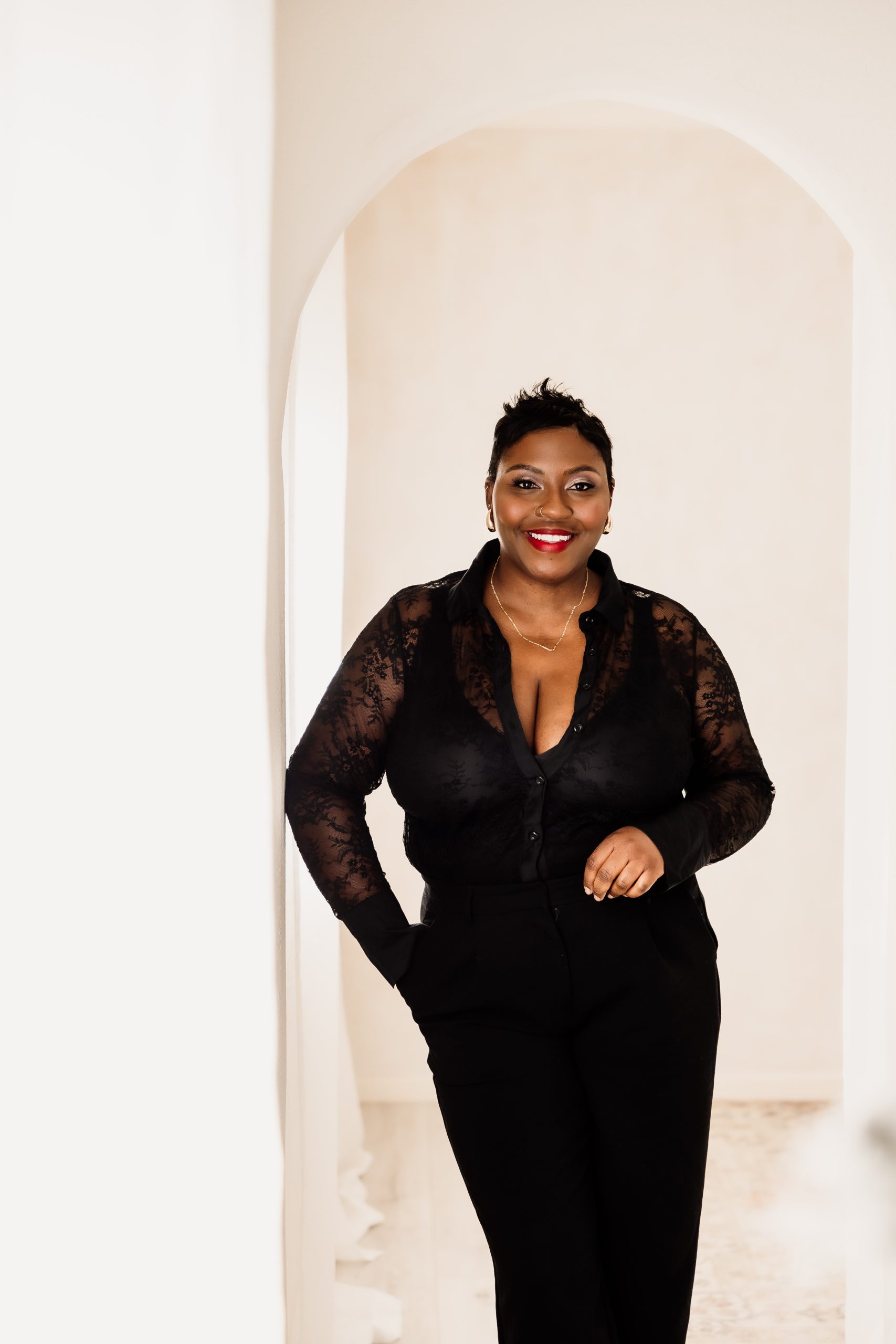
Hello, hello! This is Kristin Revere with Ask the Doulas, and I am thrilled to chat with Ciara Lyons today. She is so accomplished, as you’ll learn. She is an MSN, RN, PHN, registered nurse, speaker, and founder of Her Black Wellness, with 14-plus years of clinical experience including almost five years in labor and delivery.
Ciara works on the maternal health crisis from both sides, training healthcare providers to deliver equitable care, and supporting Black and Brown women through her community program, The Matriarch’s Table. What makes Ciara even more different is that she has also had lived experience. Her own journey through IVF, ectopic pregnancy, miscarriage, and severe postpartum depression means she doesn’t just bring the credentials; she brings receipts. And today, our topic is the postpartum experience.
Welcome, Ciara!
Thank you for having me! I appreciate you!
I appreciate you and the work you’re doing! It’s funny that we happen to be recording this during World Doula Week where the maternal health crisis is brought up even more frequently on social media, but I love labor and delivery nurses so much, as a birth doula and childbirth educator. The work that you’re doing within the system – and as I mentioned earlier, with the community – is so important.
Thank you! I agree. Like you mentioned, I have experienced it from the patient’s side, and then just experiencing it from the provider’s side – my eyes are wide open, and I’m just trying to help others open their eyes, as well, to what’s going on.
Exactly. It’s so needed. And having personal experience, you understand in a different way that I’m sure in your community, in your speaking engagements, in your writing – that comes out. I have personal stories that have shaped me and made me passionate about supporting women’s health in particular. With preeclampsia, a NICU baby, advanced maternal age – I feel like our lived experience brings a passion into it. Of all of the ways you can focus your nursing talent, the fact that you’re working in maternal health is so important.
Yeah. I think one of the things that has kind of just led me here – I was a labor and delivery nurse before I had my own child, and I feel like we could do better when we’re providing care to these mothers and to their families. And I would think that at the bedside, right? But at that time, I didn’t fully know exactly how I should show up. I just knew that I wanted to. And so then fast forward to me having my own child, and after I kind of climbed out of my postpartum depression and anxiety, I first was a mama coach, and then I transitioned to Her Black Wellness because I was like, we need so much more than pregnancy. We need the whole spectrum of what’s going on with us and our reproductive lives.
Exactly. I feel like that postnatal time is not talked about in the way that pregnancy preparation is, and as a nurse, you have seen your patients in that vulnerable time after delivery, and with the first feeding and newborn exams, and if a NICU stay is needed – all of those emotions. So I love that we’re going to talk a bit more and do some education on the postpartum experience and what to expect and how to better prepare and advocate for yourself after delivery.
So what are some tips that you have for our listeners as far as preparation for the postnatal phase, and what are you sharing in Her Black Wellness?
I would say my first piece of advice would be to plan for your postpartum like you plan for your pregnancy and you plan to deliver. I think we’re so excited once we get pregnant, and then going through the pregnancy, we’re all focused on baby coming and what that’s going to be like and getting everything cute. But I don’t think we as a society put emphasis on what happens once baby is here and mom is trying to recover. So I would say that focusing on what is going to happen once you come home, or if you do have to spend time in the NICU or any other health conditions arise, what will your support system look like? So I would say that’s my first piece of advice. And within Her Black Wellness and The Matriarch’s Table, we discuss and help with how to best advocate for yourself and then making a plan when it comes to your postpartum.
Exactly. And there are so many situations. As postpartum doulas, my team is in homes for the first year, and things come up. There may be health issues for our clients that they were not aware of that can happen, like a retained placenta, for example. They’re getting a fever. There may be reasons for readmission, and certainly the mental health aspect of things that are being discussed more than when I had kids, certainly, but still, there’s not enough awareness about resources and postpartum support. National is one of my favorites for clients who live in rural areas and don’t have in-person or local virtual support groups to turn to.
Right, they are a mainstay. And for those folks who do live in rural areas, a suggestion I have: if you’re involved with any of your neighbors or local groups, to see how best you can build relationships so that when you’re going to have kids, the other people rally around. I think that’s something that we’re missing a lot within our society now. It’s very individualistic instead of a collective, a village. And for many reasons, right? We’re all spread out. We work a lot. There are so many reasons that this is the case, but I also think that that’s kind of what’s doing us a disservice is because we no longer have that group where there are multiple people who are helping, multiple people with eyes on that family, that mom who’s trying to recover, that baby. So yeah, I would suggest trying to build a community or a village around you and your family to help during these times.
I agree, and even if we do live near family, oftentimes we’re in that season, for my clients who are older, where they’re caring for their parents, as well. Their parents may not be able to help as much. And siblings may not live nearby. But I did some trainings early in my doula career with Malaysian healing traditions, and I did a Zulu birth doula training, and it dealt with a lot of that postpartum recovery and food as part of the healing process and having others help care for baby and baby wearing, of course, and some of the rituals around postnatal recovery with belly binding. There’s so much that we are lacking, but a lot of it is that support and people not only helping to care for baby or babies, but the mothers.
We forget about mama! I mean, I think sometimes as moms, we forget about ourselves, as well. We have our baby, and then immediately we kind of just go into this, okay, now I’m trying to keep this child alive. In a lot of ways, we kind of maybe compartmentalize. So we in a sense forget ourselves. So having someone like a doula, a postpartum doula, or a family member, whoever comes in, to kind of remind us that we also need to rest, that we don’t need to do everything and hold everything together – it’s really beneficial and that’s why I’m very much like, get you a doula! Or make sure you have someone who is there to help support you! I was fortunate to have my mom, and she has four sisters who I’m really close to, so my aunts kind of alternated when I had my daughter, and my mom would be like, sit down. Why are you doing things? I will help you. You don’t have to do this. Or go to sleep! Stuff like that. I didn’t even realize that I was doing it because I was just in it. So it would be really beneficial for others, I think.
Absolutely. And having worked in the hospital system for so long, what are your tips for our listeners who are first-time parents who haven’t cared for a baby, haven’t gone through the postnatal recovery phase – what are some signs they should look out for? How can they advocate for themselves when they’re in the postpartum room? And what are we missing when we’re sharing information about that journey?
I would say right after you’re having your child, especially if you’re in the hospital, I like to say that figuring out how to feed your baby tends to be a very high stressor after delivery. That’s what I experienced for myself, and that’s what I have experienced as a nurse. And one thing I do think helps is if folks will meet with a lactation specialist or consultant before having baby, having more awareness about feeding before they go in to deliver. Because I think that just kind of quells the anxiety around it. If we as providers could also kind of remind them that it’s okay and really get in and help them learn and let them know that it takes time, but it’s going to be fine. So I would say that’s my main thing. That’s what I notice, the feeding aspect is top of the list.
I agree. And I’m a big fan of, as you said, that education during pregnancy when you’re able to absorb more and you’re not focused on healing and trying to learn, so taking a breastfeeding class or a back to work pumping class and having your partner or anyone who’s involved in your care attend. I know having my daughter, my first, in the NICU, and really wanting to breastfeed and having taken a breastfeeding class, it helped that the class had given me some pumping knowledge and allowed my husband to support me, as well, by remembering some different holds and latches when I was finally able to breastfeed my daughter.
As you said, usually while we’re still pregnant, but as soon as we have our babies, we’re just kind of like – we’re just in it. We can’t really see the big picture. And yeah, having your partner or anyone who’s going to support you, especially in that initial period, also learn – it’s so beneficial. I think the main thing is that we need education, right?
Yes, absolutely! And I feel like now people are going to YouTube and social media and moms’ groups, but nothing replaces an expert like yourself, having a nurse lead a childbirth class, or a childbirth educator that has that background versus hearing, like, tips from influencers. Sometimes that information that I see in mom groups is not correct, and especially when it comes to feeding your baby and dealing with weight gain – go to a pediatrician, a lactation consultant. Go to the experts! Some of that anecdotal stuff, like tips for the nursery, then certainly go to those mom group communities. But nothing beats education.
Yeah, I agree! And I think the proper education also will help so much with the anxiety that comes with this new stage. I think like you said, we see stuff on social media and on these groups, and as a society, as women, I feel like we want to be perfect and we want to show up as that with each other and in the world, and sometimes I believe that gets in the way of the real truth about what feeding, what being pregnant, what postpartum, what raising kids looks like. Education and getting it from a qualified individual – and I don’t mean that they have to have this specific thing, but someone who really has your best interests at heart.
Exactly. And family and friends can be well-meaning, but having an expert outside who’s not attached to you and is able to come in without any judgement is also helpful.
Yeah, I agree. I have my own experience with that with my mom. She tried breastfeeding me and my siblings, but it didn’t last long when she did it. But when I decided to breastfeed, I had issues with the latch and eventually went to exclusive pumping. And she would be like, you don’t have to do that. And I know she just meant well, like she didn’t want me to be stressed out about it – but I was like, no, I want you to support me and help me find the answer of why this is happening! They’re just trying to help you and trying to figure out – like, trying to say the thing that they feel like will help, even though it may not be what you want.
Yes, different goals, just trying to solve the problem and ease some stress. But yeah, I’m glad that you persevered! Pumping takes a lot of effort and focus. Good for you! That’s awesome!
Thank you! Yes, and I was glad when it was done.
Yeah, I pumped for quite some time with my daughter, and exclusively breastfeeding my son, it was like, that was so much more dedication, to exclusively pump, than it was to breastfeed directly.
Yeah. It’s a beautiful journey, but it’s also a harder journey, and that’s okay.
And everyone has different goals, has different medical needs, and every birth and baby are so different. I would love to learn more about Her Black Wellness and the community that you created there.
Yeah, it kind of just came from my own experience and what I had seen in the hospital setting, as well, of just us needing more education, someone being attentive to us, and then needing a community where we didn’t feel judged or like we needed to be a certain way to be seen or heard. I did have a traumatic experience with my ectopic pregnancy before I had my daughter. I ended up having to have emergency surgery for it, and that experience really just opened my eyes even more to how patients are dismissed, especially Black and Brown folks, when they present to the hospital with complaints. And once I came out of that, once I went through IVF and eventually had my daughter, I was just like, people need someone to stand in the gap for them. They need someone who will show up, who has knowledge and who can say, hey, this is not right. And also potentially give action steps of how to move forward from that situation. And that’s how Her Black Wellness came to be, because I was like, I can do that! I mean, I’ve kind of already been doing that for all of these years I’ve been a nurse, for my patients, advocating for them with their doctors, with their families. And then I also on the other hand love when I’m able to talk with other moms about becoming a mother and then motherhood. And even just our health on an individual level because there are so many things that we don’t know about our bodies, and that’s by design, in my opinion. There are so many things that we probably could be getting help for that we just don’t even know because you don’t know what you don’t know. Her Black Wellness came to be because of that because I wanted to put out information about what’s going on in healthcare from a medical professional perspective, but also a Black woman’s perspective and from a mother’s perspective. And to help guide the community. I mentioned that focus on Black and Brown, but it’s for everyone. If the information applies to you, please come and join! I just want us to be able to thrive at the end of the day. That is really what Her Black Wellness is about.
And how do our listeners learn more and join the program?
We don’t have a full program going in that way, like a coaching program, but I’m planning to have an event. I’ve had two people tell me to have an event recently where we kind of just have a round table where people can come together, women, and share our stories and just kind of heal and look to the future. Like, let’s talk about how we want to change the landscape. Let’s talk about our health, how we want to move forward. So that’s my plan moving forward. But I’m on Instagram, and I am on Threads. I love Threads. And I’m on Substack, and that’s where I chat about different stuff. You can reach out to me in those places. And we can talk about workshops and things like that where I just come and speak with your community or the people that you know and love and organizations who want to change and who need change.
And then you’ve got The Matriarch’s Table, in addition to Her Black Wellness – tell us a bit about that.
The Matriarch’s Table is focused on Black and Brown women and maternal health advocacy. That’s when I talk about story telling and how we can best come together as a community to help each other. So it’s really just about building a village, building community in the sense of trying to change the face of motherhood. I feel like we’ve been talking about it forever, what motherhood feels like, and I feel like we need to start putting action in motion. That’s pretty much what The Matriarch’s Table is about.
Excellent! Any final tips for our listeners in relation to the postpartum experience?
Yes, just know that there’s no perfect way to do anything, but especially postpartum. From my own experience, as well, I feel like we all have this idea in our mind about what it’s supposed to look like, and what it’s supposed to look like is what it looks like for you. So if that means that you couldn’t do certain things or whatever it is, it’s perfect for you as long as you’re okay and you’re thriving and your family is okay and thriving. So I would say don’t be preoccupied by what others are doing or what others’ experiences were. Just worry about making your experience the best it can be within your situation. That would be my advice.
Excellent advice. And one last reminder of how our listeners can connect with you, Ciara?
Yes, I’m on Instagram @herblackwellness. I’m on Threads @herblackwellness as well. I’m also on LinkedIn. My Substack is called They Weren’t Listening. That’s where I talk about healthcare, and I talk about motherhood as a nurse and as a patient. Find me there! DM me; I’d love to chat.
Thank you so much for sharing, and we’ll have to have you on again! I will check out your Substack and be sure to subscribe!
Thank you!
IMPORTANT LINKS
Birth and postpartum support from Gold Coast Doulas