


December 31, 2025
How Doulas Support Inductions: Podcast Episode #323
In this solo episode of Ask the Doulas, host Kristin Revere, founder and CEO of Gold Coast Doulas, explores how doulas can offer calm, confident support during labor inductions. Kristin breaks down what to expect when an induction is recommended, from the different medical methods to the emotional journey that often comes with it. She shares how doulas help families prepare, navigate the hospital environment, and stay informed and empowered no matter how birth unfolds. Whether your induction is planned or unexpected, this episode will help you understand your options and feel supported every step of the way.
This episode is brought to you by Seesee pajamas for postpartum moms. Use the code Doula for 20% off. Find them at shopseesee.com.
Hello, hello! This is Kristin Revere, host of Ask the Doulas and founder of Gold Coast Doulas, an I am excited to chat in this special solo episode about how doulas support inductions. Inductions can be intimidating, and I’ve had students in my Comfort Measures for Labor class question the need for doulas with a more medicalized birth, if their plan was essentially to have an unmedicated birth, or potential clients, as I do the matchmaking with doulas on my team. I also take birth clients myself, and that topic comes up, how a doula can be useful during a planned or unplanned induction. Sometimes they happen very quickly and spontaneously.
So inductions are common. They can be very initimidating. They can be confusing. It’s something that I personally experienced with my first birth, and to get into my own personal story with induction, I had a healthy pregnancy up until I didn’t. And at 37 weeks, I started having issues with blood pressure. And my midwives and OBs who oversaw the midwifery care that I had – they had some concerns about the rising blood pressure. We did a lot of nonstress tests. Over time, I was on bed rest and trying to take care of myself. I started to have that conversation about a potential induction being needed. At 39 weeks, I was induced. My plan of having a fully spontaneous labor and fully unmedicated birth changed. Luckily, my husband and I had taken Lamaze class. Lamaze is similar to the HypnoBirthing that we offer, and it goes into not only the stages of labor, preparation with physical support and breathing, but gets into any potential interventions in the hospital setting. And it did discuss inductions and how to prepare for one. So we felt pretty prepared on the changes in our birth plan. At the time, I didn’t know what doulas were. I certainly would have hired doulas if I had known about that as an option. But certainly there are many medical reasons for induction. Sometimes they are elective for various reasons, with the provider of course being on board, and sometimes baby just needs to come sooner, and that decision could be made day of. That could be issues with hypertension rising. I had about a week’s notice to prepare, but that decision was made quickly because of my blood pressure, and I had protein in my urine and various signs that showed that preeclampsia was definitely a concern and my daughter needed to be born. So I personally was scared, and it wasn’t my dream birth that I imagined. But inductions aren’t always bed, especially if there is a medical reason. There are various reasons that we can get into in a longer episode about why an induction may be needed, whether it’s low fluid or potentially sometimes it can be big babies, sometimes advanced maternal age. Certainly, elevated blood pressure. There can be other medical reasons for an induction. Sometimes inductions are scheduled births. It’s not always done for a medical reason.
And there are many different ways to induce labor, and doulas can be supportive in all of those ways. Not all inductions involve pain medication. Mine did not. I had a membrane sweep at my nurse midwife’s office as the start of my induction, and then I went home for several hours and went into the hospital. They had expected me to rest overnight and even gave me a meal. But my daughter had other plans. I was induced with a cervical riper, Cervidil. I see Cytotec being something that’s more common in the hospitals I work in, but back when I had my daughter, I had Cervidil. And she wasn’t loving the Cervidil, so we eventually took it out. But I was contracting. My body was responding. I didn’t end up needing Pitocin, and I was managing labor, even with back labor – she was posterior – on my own. At one point, I remember asking my husband to discuss pain management, and as we had discussed in class, he just distracted me, and I didn’t ask beyond the one time. But certainly I knew about the pain management options between looking into an epidural. Nitrous wasn’t an option when I delivered, but now it’s something I discuss with clients. Or having something to take the edge off, like a narcotic. And that could be a way to minimize pain, but not all inductions involve breaking the water or having Pitocin to bring the contractions closer together.
No matter how an induction is done, how quickly an induction goes – and I had my daughter in the early hours of the next day, so it was a quick first-time baby induction. Once I was able to flip my daughter with the help of my husband and a nurse popping in to show me how to move my hips a different way, she was born very quickly. But a surgical birth was brought up. There were people that were concerned, some of the nursing team, and the midwives checking in on me were concerned about how she was responding on the monitors. She was born quickly, which avoided a surgical birth. But I could certainly have used doulas to help give me information. My husband had the binder from our Lamaze class to go through different interventions and positions to try, but having doulas would have been amazing.
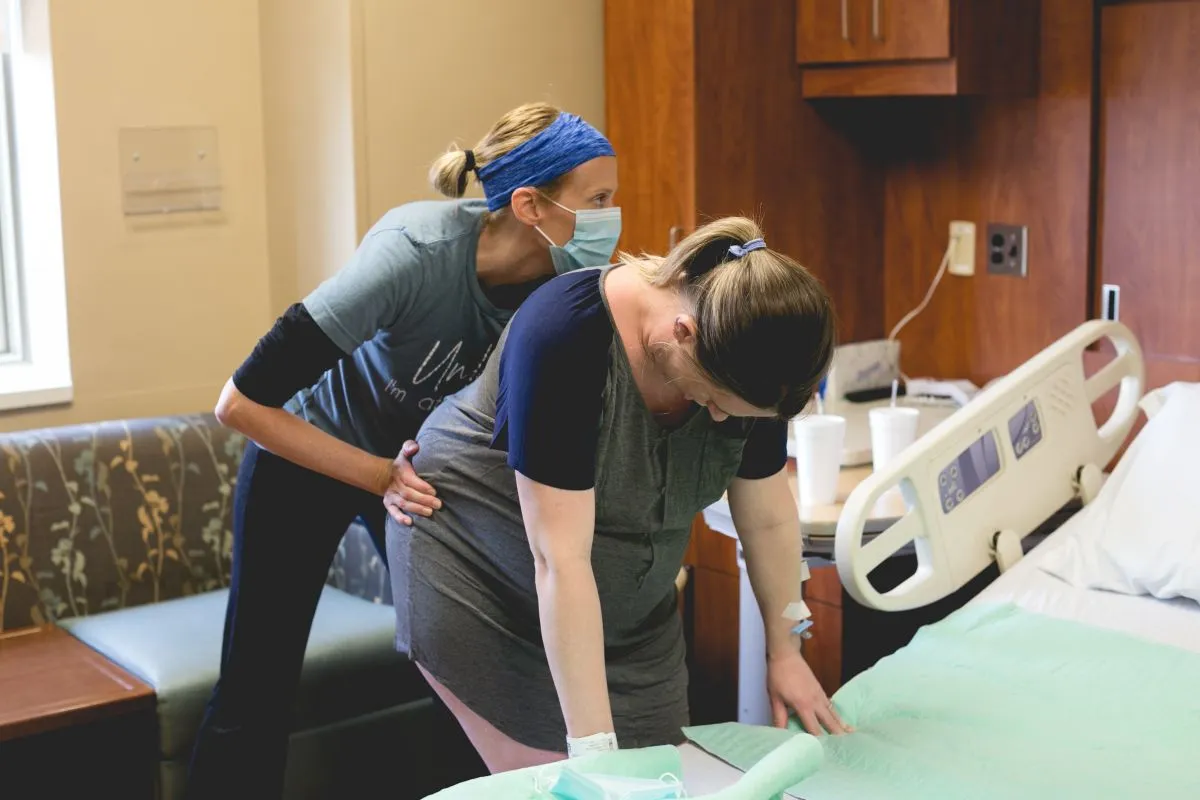
Doulas can certainly help with physical positions, with emotional coaching, especially in those times that can be fear-filled, just to slow it down. If the baby is posterior, like my daughter, doing hip squeezes and counter pressure. I felt like the counter pressure my husband did wasn’t enough; nothing could be hard enough as far as the pressure. Doulas can certainly take turns with the partner. My husband was hands-on, and when we hired doulas with the second birth, which was not an induction, I hired them wanting to avoid an induction or to have their support during one, and if I developed preeclampsia or any other medical conditions with my pregnancy. But it was a spontaneous, quick birth, so I didn’t need them for induction support. But doulas can take turns with a partner in doing some of the physical support techniques. They know how to move a hospital bed into different positions; they know what to do if labor stalls. They also can talk through the risks and the benefits and the alternatives to any nonemergent decisions that need to be made and just give a little space.
We try not to influence the decision and we support our clients with whatever decision-making the couple or the client end up deciding on. So if they wanted an unmedicated birth originally and decided to get an epidural, as doulas, we can support those changes. If they want to have a code word before pain management, we can help them in a prenatal visit to talk about that. We also know all of the different policies and procedures at the hospitals we work in. I know to ask for hot packs and where the ice chips are and how to get a peanut ball and a birthing ball and the heated blankets and how to work with the nurse in changing positions if an epidural is required. In an induction like mine, I could have labored in water or had other options available to me, since I didn’t have an epidural.
We can also do some visualizations and affirmations or remind them of different childbirth preparation methods. If there is something on the birth plan that is forgotten about, like delayed cord clamping, a doula can help with all of that. And what we do at Gold Coast Doulas, if a client has a plan for a spontaneous day-of induction, in addition to the prenatal visit that we have, which is ideally between 32 and 35 weeks, going over the birth plan, we do a call in advance of that planned induction to go over what to expect, when to call the doula in an induction. At Gold Coast, we don’t have an hourly clause. With inductions, we’re there whenever the client wants us to be. If they’re very nervous or want that emotional support and they’re not in active labor yet, they still have the ability to call us in. There’s not a specific point. It’s whenever they want in-person support. Doulas on my team share call and work with partners, so they might trade in and out during an induction, or if a doula has bee there for 30 hours and doesn’t have the strength to support the pushing phase, then we might call in a backup from our team, and the same goes for other doulas. They would be able to be there until baby is born. Also, sometimes with inductions like mine with my daughter, the baby ends up in the NICU. If I’d had doulas with me when my husband was with my daughter in the NICU, I would have had someone there. In my case, it wasn’t until later, like when I was settled in my postpartum room, that my daughter went to the NICU. It was after the heel prick. So it wasn’t immediate, but with some births, baby goes to the NICU right away and the client is left alone, and that can be overwhelming, to try to figure out a feeding plan if they desire to pump, to process what just happened, and to have that emotional support and handholding when their partner is with the baby, or if it’s twins or triplets when it’s multiple babies. So a doula can be useful in feeding support and processing everything. We also have a follow up visit within two weeks of delivery so we can process the birth, give resources in the community for, say, lactation consultants or if the plan is to run a marathon within the next six months, to get pelvic floor physical therapist referrals. Also, whatever resources might be needed mentally, if there was posttraumatic stress after the birth or any perinatal mood disorders; doulas are able to give those resources and support in those ways.
As I mentioned earlier, there are many different types of inductions. There are different methods, whether it’s the membrane sweep, Foley balloon, Pitocin, breaking the water. And certainly, sometimes pain management like epidurals can be used. There is that fear of a cascade of interventions once you start one, like a membrane sweep or the Foley; then maybe all of the others in that order start cropping up. But that isn’t always the case. With my birth, again, I only had the membrane sweep and the Cervidil, the cervical ripener, and that’s all my body needed to kick in. So everyone is different. And if it’s your second or third baby, your body might respond even quicker to an induction. With some inductions, I’ve had clients be induced and their baby is born in a matter of hours. Sometimes it can be multiple days. So no matter if it is a quick birth or a very exhausting, multi-day birth, a doula can be helpful.
But we don’t just show up for active labor at a certain point like seven centimeters. There’s no rule, and doulas can support the partner, who may need to check in other kids or may need a nap or may need a break from hip squeezes. A doula can be very useful in those long or short inductions. Whether a birth plan goes exactly as imagined or there are some detours along the way, I feel like birth doulas are beneficial all the way through the process. And postpartum doulas can be helpful after an induction, whether baby had a NICU stay like my daughter or if there are feeding challenges. Inductions can also be long. As I mentioned, some are multiple days, and if you go in at night and you miss that night of sleep, if you’re not able to fully relax, and then you’re caring for your baby. Sometimes postpartum clients will have us come in for day or overnight support for a couple of days until they can get back to their new normal or until family can help out. We are useful in that role as postpartum doulas, not just labor doulas.
It can be beneficial no matter the type of birth, and doulas are also amazing supports to planned surgical births. We get hired with known surgical births and high-risk clients where it might turn into a surgical birth. We’ll have to talk about that one in a different episode. But just think, if you want to consider all of your options, that a doula isn’t just for unmedicated home or hospital births. We can be for any type of birth, whether it’s planned or as detours happen along the way.
I would love to hear your thoughts on this. If you used a doula for your induction, how did that go? Would you hire a doula again? We’ve certainly had clients find out that they’re getting an induction at 39 weeks and they hire us, but hiring early allows more of that preparation, or if someone is on bedrest, whether hospital bedrest or at home, we can come in and do some childbirth education recaps and get you prepped. There are so many different ways that a doula can be helpful.
Feel free to reach out to us at Gold Coast Doulas with any questions or with future podcast topics. Thanks for listening!
IMPORTANT LINKS
Birth and postpartum support from Gold Coast Doulas